Jonah Lomu Net Worth 2026 - The Giant Who Rewrote Rugby's Commercial Rulebook
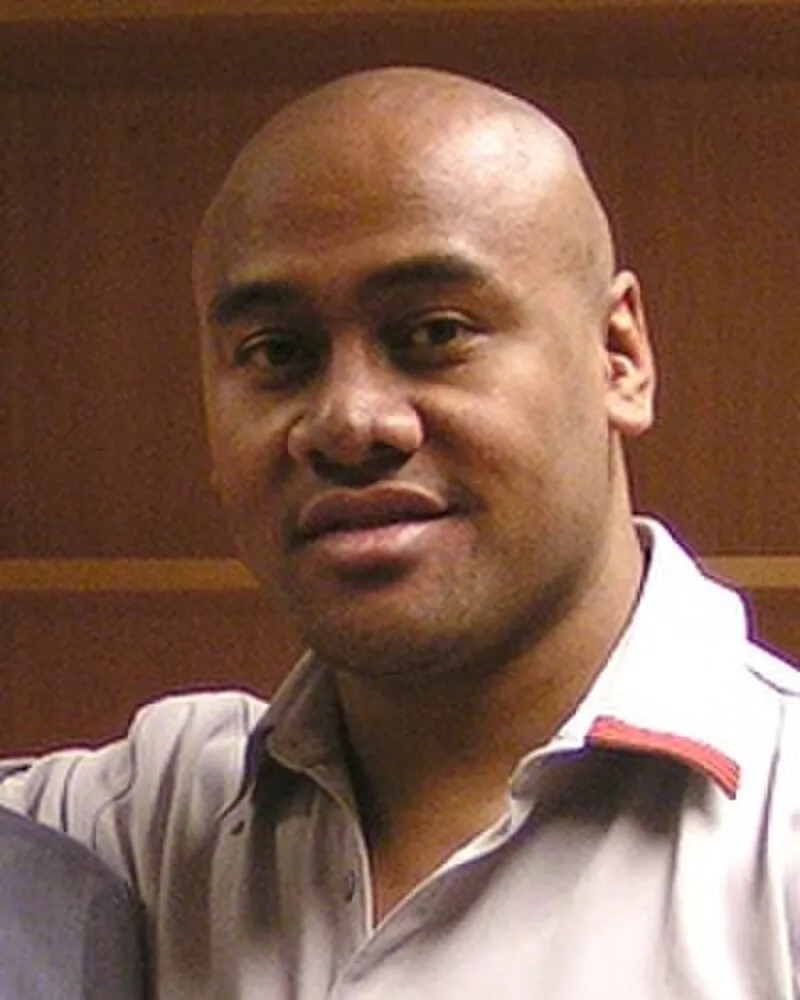
Photo of Jonah Lomu, via Wikimedia Commons
There is a before and after in the history of rugby's relationship with money, and both are separated by a single moment: Jonah Lomu thundering over Mike Catt at the 1995 Rugby World Cup. In that instant — watched by tens of millions of viewers across the globe — professional rugby acquired its first genuine superstar, and the sport's commercial possibilities were irrevocably altered. To discuss Jonah Lomu's net worth is to discuss not merely a personal fortune, but the economic watershed moment that made modern rugby player wealth possible at all.
At the time of his death in November 2015, Jonah Lomu's estate was estimated to be worth in the region of £3.5 million to £4.5 million — a figure that, given the era in which he played and the financial chaos that marked parts of his personal life, is both a testament to his commercial impact and a sobering reminder of the opportunities that slipped through his fingers. In 2026, his estate and the ongoing commercial value of his name and likeness are estimated at approximately £5 million, sustained by licensing, posthumous endorsements, and the enduring cultural resonance of his legacy.
The 1995 Moment That Changed Everything
Lomu arrived at the 1995 World Cup in South Africa as a relatively unknown 20-year-old. He departed it as the most talked-about rugby player on the planet. His four tries against England in the semi-final — including that iconic run over Catt — were broadcast to an audience that dwarfed anything the sport had previously commanded. Adidas, who had signed him ahead of the tournament, watched the value of their investment multiply overnight.
Crucially, the 1995 World Cup coincided almost exactly with rugby union's transition to professionalism. Lomu was the sport's proof of concept — the demonstration that rugby could produce stars capable of crossing over into mainstream popular culture. Without him, the financial architecture of professional rugby might have taken years longer to develop.
Earnings in the Professional Era
Lomu's All Blacks career spanned 73 test caps between 1994 and 2002, a period during which New Zealand Rugby was still finding its feet commercially. His contracts with the NZRU were substantial by the standards of the time — estimated at NZ$500,000 to NZ$700,000 per year at his peak — but they were modest in comparison to what his global profile could theoretically command.
His club career took him to the Counties Manukau and Wellington provincial unions in New Zealand, before a move to Cardiff Blues in 2005 brought him to Wales and exposed him to a new European audience. A stint with North Harbour and later Marseille in France followed, though by this stage his kidney condition — which had been diagnosed in 1995 and required a transplant in 2004 — was significantly limiting his availability and performance.
Total career club and international earnings are estimated at approximately £4 million to £5 million across the span of his playing days, though financial difficulties in later years — including a widely reported divorce settlement — reduced the portion of this that was retained.
The Endorsement Revolution
It is in the realm of endorsements that Lomu's true commercial significance is felt most clearly. His deals with Adidas, Ford, Sprint, and a host of other global brands during the late 1990s and early 2000s were unlike anything rugby had seen before. At his commercial peak, his annual endorsement income was estimated to exceed £1.5 million — a figure that placed him in the company of football's elite earners and far ahead of any rugby player who had come before him.
His face appeared on billboards across New Zealand, the United Kingdom, Australia, and Japan. He featured in television commercials that had nothing to do with rugby — selling cars, telecommunications services, and lifestyle products to audiences who might never have watched a match. This crossover appeal was unprecedented in rugby and remains a benchmark against which modern players' commercial potential is measured.
Media and Cultural Legacy
Lomu's media footprint extended well beyond advertising. He was the subject of a major documentary, appeared on countless television programmes across multiple countries, and wrote an autobiography that sold strongly in the UK and Australasia. His media engagements contributed an estimated £200,000 to £400,000 over the course of his post-playing years, and the ongoing licensing of his image and story has continued to generate income for his estate.
In the United Kingdom, where his 1995 World Cup performances were watched by a generation of rugby fans who still regard him with reverence, his cultural currency remains extraordinarily high. The BBC, ITV, and Sky Sports have all featured retrospectives on his career, and his name is routinely invoked in discussions of the sport's greatest players.
The Financial Legacy
Perhaps the most significant aspect of Jonah Lomu's financial story is not the money he personally accumulated, but the commercial infrastructure his existence helped to create. The multi-million-pound contracts now signed by players such as Antoine Dupont, Beauden Barrett, and Marcus Smith exist, in no small part, because Lomu demonstrated to broadcasters, sponsors, and governing bodies that rugby could produce stars with genuine mass-market appeal.
The World Rugby Player of the Year award, the expanded Rugby World Cup broadcast rights deals, the proliferation of global rugby sevens as a commercial property — all of these developments were accelerated by the proof of concept that Lomu provided in 1995. His estate, managed on behalf of his sons, continues to benefit from licensing agreements and commemorative commercial projects that reflect the enduring power of his name.
Jonah Lomu did not die a wealthy man by the standards of what his talent warranted. But the financial landscape of professional rugby in 2026 — worth billions of pounds in broadcast rights, sponsorship, and player contracts — bears his fingerprints more clearly than almost any other individual in the sport's history.